
Even if there is an early agreement on a cessation of hostilities in West Asia, the price shock will not go away easily, points out A K Bhattacharya.

If TVK MLAs and ministers are perceived as clean, or demonstrably cleaner than their predecessors, the credibility dividend will be enormous. The voter will feel rewarded, points out Ramesh Menon.

On Agri Stack, Expenditure Secy V Vualnam says it's progressing well; using IT, farmers will be able to choose exact fertiliser quantities needed, reducing crowding at fertiliser outlets.

Using the debt-to-GDP ratio as a fiscal anchor aligns with efforts to promote fiscal transparency through proper disclosure of off-budget borrowings.

The Budget should undertake further reductions in import tariffs and seriously consider an announcement of India's intention to join one or both of the two Asian mega-regional free trade agreements, suggests Shankar Acharya, former chief economic adviser to the Government of India.


Budget 2025-26 delivers a carefully calibrated strategy-stimulating demand and investment while keeping fiscal discipline intact. In an environment marked by global trade disruptions, and a softening in urban consumption, Finance Minister Nirmala Sitharaman has taken a measured approach.
The Union Budget for 2004-05, which is being viewed as a "litmus test" for the Congress-led government, may unveil the roadmap for wiping out revenue deficit well in advance by 2007 and a subsequent reduction in fiscal deficit to manageable limits.

BJP's reversals in rural Gujarat has prompted many policy watchers to predict that the Budget would have incentives for the agriculture sector and the rural economy.

Government looking at cushioning slowdown due to demonetisation with sops and higher outlay for micro, small and medium enterprises, agriculture, and affordable housing.

'The finance minister missed yet another opportunity to simplify the income tax structure in the Budget.' 'This was an opportune moment to get rid of the old tax system entirely and move fully to the new system,' asserts M Govinda Rao, member of the 14th Finance Commission.

To enable widen the fiscal deficit beyond the permissible limit under the present legislation, the government may have to propose amendment to the FRBM Act in the Finance Bill.
The panel may include or seek inputs from former RBI Governor Urjit Patel, former chief economic advisor Arvind Subramanian, Sajjid Chinoy of the PM-EAC, Rathin Roy, among others.

The government on May 17 formed a five-member committee.
The FRBM report, to be submitted on Tuesday, is likely to have 'excuse clauses', absolving the government of meeting its fiscal commitments under certain conditions such as war or conflict, global economic meltdowns or natural disasters.
States also demanded that Budget for 2015-16 should make adequate provisions for central sales tax compensation for early roll out of Goods and Services Tax, a Constitutional Amendment Bill for which was tabled in the Lok Sabha last week.

The Pakistan Cricket Board (PCB) has claimed to have earned three billion rupees by hosting the ICC Champions Trophy, exceeding its target of two billion rupees.
Vijay Kelkar, who headed the committee on tax reforms, on Tuesday warned that higher economic growth and foreign direct investment flow could not be achieved without hard fiscal reforms.
A parliamentary committee has pulled up the finance ministry for not adhering to Fiscal Responsibility and Budget Management Act in cutting revenue deficit by 0.5 per cent of GDP for 2005-06 saying there should not be deviations every now and then.
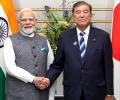
Prime Minister Shigeru Ishiba's sudden resignation after only a year in office has thrown Japan into political turmoil, raising doubts about how the country will handle economic and regional challenges, observes Dr Rajaram Panda.

However, finding the funds to fulfill them will be a herculean task.

Senior bureaucrats say the government has planned a 'feel-good' Budget after the 'pain' of demonetisation.

'If some measures are implemented quickly, they can help revive growth.'

'I found it unbelievable that L&T said 45,000 jobs were waiting to be filled because of unavailability of suitable skillsets.' 'So, when the Opposition sweepingly says there are no jobs, I'm sorry... I'm not saying it's raining jobs, but there are jobs. The (skill) gap has to be bridged.'

Why did the political system in the country react to these two decisions of the Modi government in a diametrically opposite manner? asks A K Bhattacharya.
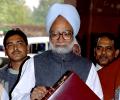
'We are going to need more technical people in government.' 'You can't expect a generalist to understand the complicated world of financial engineering.' 'I regret to say that most of our politicians have no competence to deal with these things. Nor is there a willingness to learn.'

Finance minister tries to put house in order before reforms are unveiled in February.

'The prime minister's comment on 'revdi culture' was welcome. But I am disappointed he did not follow up on that.' 'All political parties, including the BJP, have been guilty of this.' 'Now, Modi's guarantees, the Congress's 'nyay' path and both ruling and Opposition parties are vying with each other for freebies in my home state Andhra Pradesh.'

Credit rating agencies have been raising red flag over high debt to GDP ratio of India.
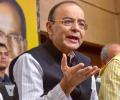
However, independent economists are not as gung-ho as the finance ministry over the likelihood of deficit target being met this time around, says Indivjal Dhasmana.

The Indian economy appears to have slowed down in 2018-19 due to lower private consumption, tepid growth in fixed investment and muted exports, a finance ministry report has said.

In fact, no other recent Union Budget has held so much significance for the Indian economy as the one to be presented in about six weeks from now, notes A K Bhattacharya.

Significantly, about half of the CEOs who took part in the survey indicated that they propose to increase their investments in near future, 45 per cent cited no change in investment levels, while only 5 per cent expected a fall.
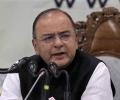
Besides advancing the presentation of the Budget to perhaps the first week of January, , there are four new initiatives that could be rolled out from the next Budget, says A K Bhattacharya.
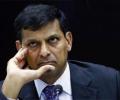
The industrial output for the third month in a row remained in the negative territory, contracting 1.5% in January

India suffers from peak power deficit of three per cent.

The government plans to raise resources to finance capital spending beyond the Rs 3.10 lakh crore budgeted for 2017-18 through higher borrowing or divestment receipts.

Making a case for an optimal fiscal stance, the Economic Survey on Friday said growth leads to debt sustainability and not necessarily vice-versa. "This is because debt sustainability depends on the 'Interest Rate Growth Rate Differential' (IRGD) i.e. the difference between the interest rate and the growth rate in an economy. "With the Indian context of potential high growth, the interest rate on debt paid by the Indian government has been less than India's growth rate by norm, not by exception," it said.

The Budget sets out a comprehensive vision.
